On change

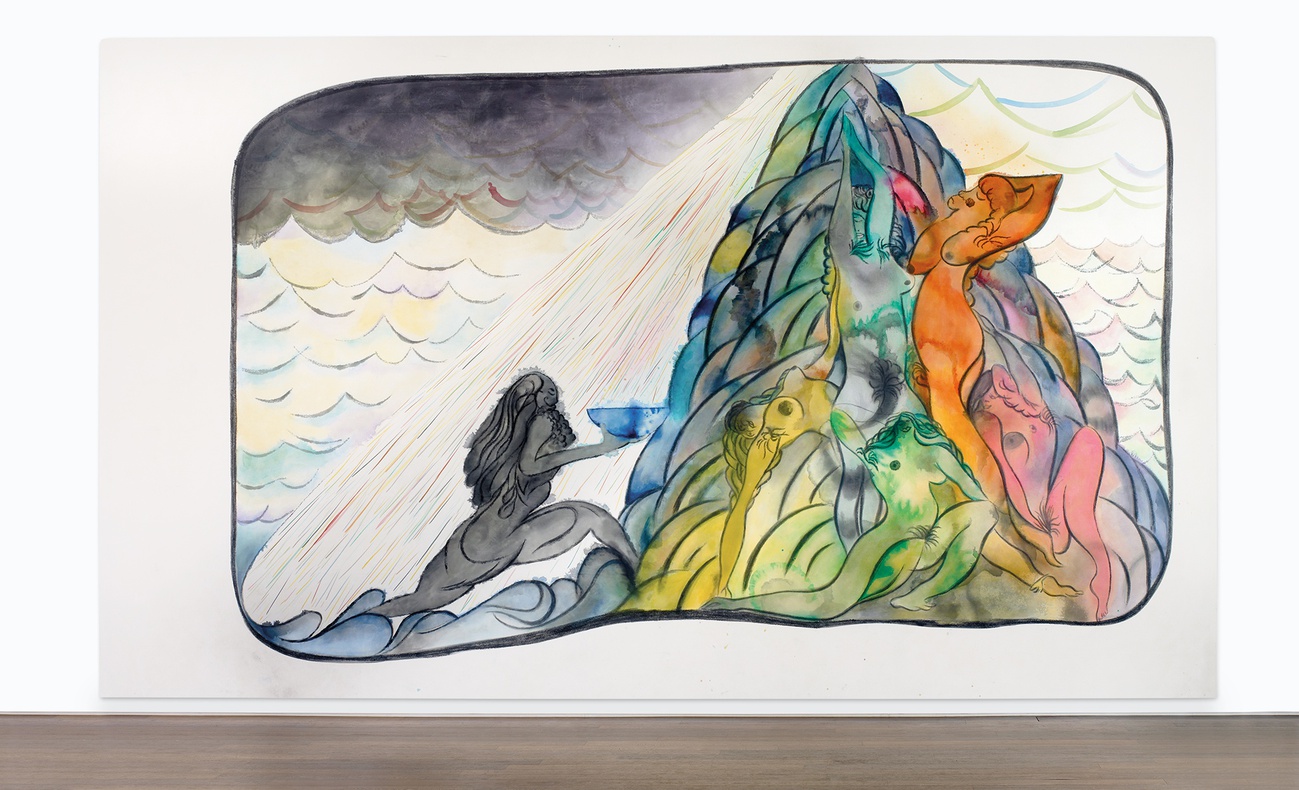
to take and to give, 2012. Acrylic on canvas, 519 x 880 cm. Artist: Chris Ofili. Source: http://www.victoria-miro.com/artists/6-chris-ofili/

Chris Ofili, painter, on moving from London to Trinidad:

I felt ready for the change to happen, and I knew it was happening inside me, he said, straining to be clear. It’s hard to go away from something that’s very enjoyable, and a domain where I felt supremely confident. Before, I was focussing on high impact, and what I wanted to find was less complex and maybe less visible.

Back from the borderlands

AM photo 1

This post is written by an anonymous contributor.

It is difficult to write about ending a mission while on mission. It is difficult to write about taking a break when the breaks one is able to take are too short to notice, too quick to be able to unwind. Working in isolated and dangerous locations takes a toll on a person’s body and mind. We come here to help people, but forget about taking care of ourselves.

I am guilty of this, of not making time to rest and re-energise. I think this is important, even in the midst of a demanding mission. It makes it easier for us to re-enter “normal” society after the mission is over, to meaningfully reconnect with those we love and who love us. I have been continuously working in so-called “deep field” locations for the pastseven years, with fluctuating levels of remoteness and insecurity. I count myself fortunate that only one person I care about was killed. I have had several friends kidnapped for Continue reading

Sea Change

SeaChange-Image-1

Source: MIT Water Club 

My father taught us very early on to respect the sea. As young girls, my sister and I would go into the water with him on an inflatable raft and learn to “catch” waves, to ride them into the shore. If we started paddling too late, we would miss the wave entirely; too soon, and it would break on top of us and sometimes throw us off the raft. We would go tumbling along on the sand under the water, forced to hold our breath until the wave let us come up for air again (getting “rolled”, as he called it). It was scary, but exhilarating.

Our most important lesson came on calm days, when he taught us not to mistake the smooth surface of the water and absence of waves for a lack of action underneath. Even when they are barely visible on the surface, there are always currents and sometimes a strong undertow. These powerful forces can carry us very far — in a direction that we may or may not want to go. And sometimes they act stealthily, taking us a ways down the shore before we even realize that we are being redirected.

When I first took a break from aid work, I felt burnt out and alone.  I started this blog in part to confront that stereotype, to respond to the many whispered conversations and questions of, “I feel like that too” and “But how did you do it?” and “Aren’t you scared you’ll never be able to go back?” I had seen a close colleague and friend, someone who I had long admired in the field, leave her job in a sudden and heartbreaking way. I supported her as best I could during her last few months at work, when she felt abandoned by the very entity that she had given so much to over the years. She eventually took the difficult and Continue reading

“Don’t be afraid of tearing it all down if you have to….”

I am about to turn 41 and would tell my 30 year old self that you do not have to conform you[r] life to an ideal that you do not believe in. Live your life, don’t let it live you.

Don’t be afraid of tearing it all down if you have to, you have the power to build it all back up again.

— Lisa, 41

Excerpt from: 10 Lessons That Will Help You Excel In Your 30s … or 40s, or 50s, or 60s, or…..

Sacrifice

This is in response to a blog prompt from The Daily Post to write about “Sacrifice.”

Prompted by the downward spiral of my country’s political process, I started binge-watching The West Wing again yesterday. I didn’t see it the first time around, when everyone was using Martin Sheen’s characterization of President Josiah Bartlet to escape the Bush presidency. It wasn’t until 2011 when, reeling from a few very personal losses, I took a leave of absence from my job and, instead of flying off to Chad as originally planned, moved into a studio apartment in the Lower East Side.

It was a sublet from a film accountant who had gone to Rhode Island to work on Moonrise Kingdom. Aside from being in enviably close proximity to Wes Anderson and his usual cast of characters, she had LOTS of DVDs–including the entire 7 seasons of The West Wing. As someone who doesn’t watch much TV,  I only made it to season 3 before moving out and Continue reading

Hot water

People are like tea bags.
You find out how strong
they are when you put
them in hot water.
-Anonymous

This tea-bag approach to what some might call resilience reminds me of what an old boss, the head of our agency’s programs in Darfur, called the problem of the “frog in boiling water.” He said that a frog can be immersed in a pot of water, and if that pot is put on a stove and the burner turned on, the frog won’t notice the gradual increase in temperature until it is too late; until she literally boils.

The metaphor may jump out (no pun intended) for some faster than others: when working in insecure environments, this was used to explain how at first something like a carjacking may cause all aid agencies to halt operations. As the frequency of such incidents increases, they become normalized to the point where a carjacking occurs and… activities go on as planned. Perhaps the incident is a footnote at the security briefing. Conversation fodder at Continue reading

Putting down roots

Alina Potts 2014_Brook

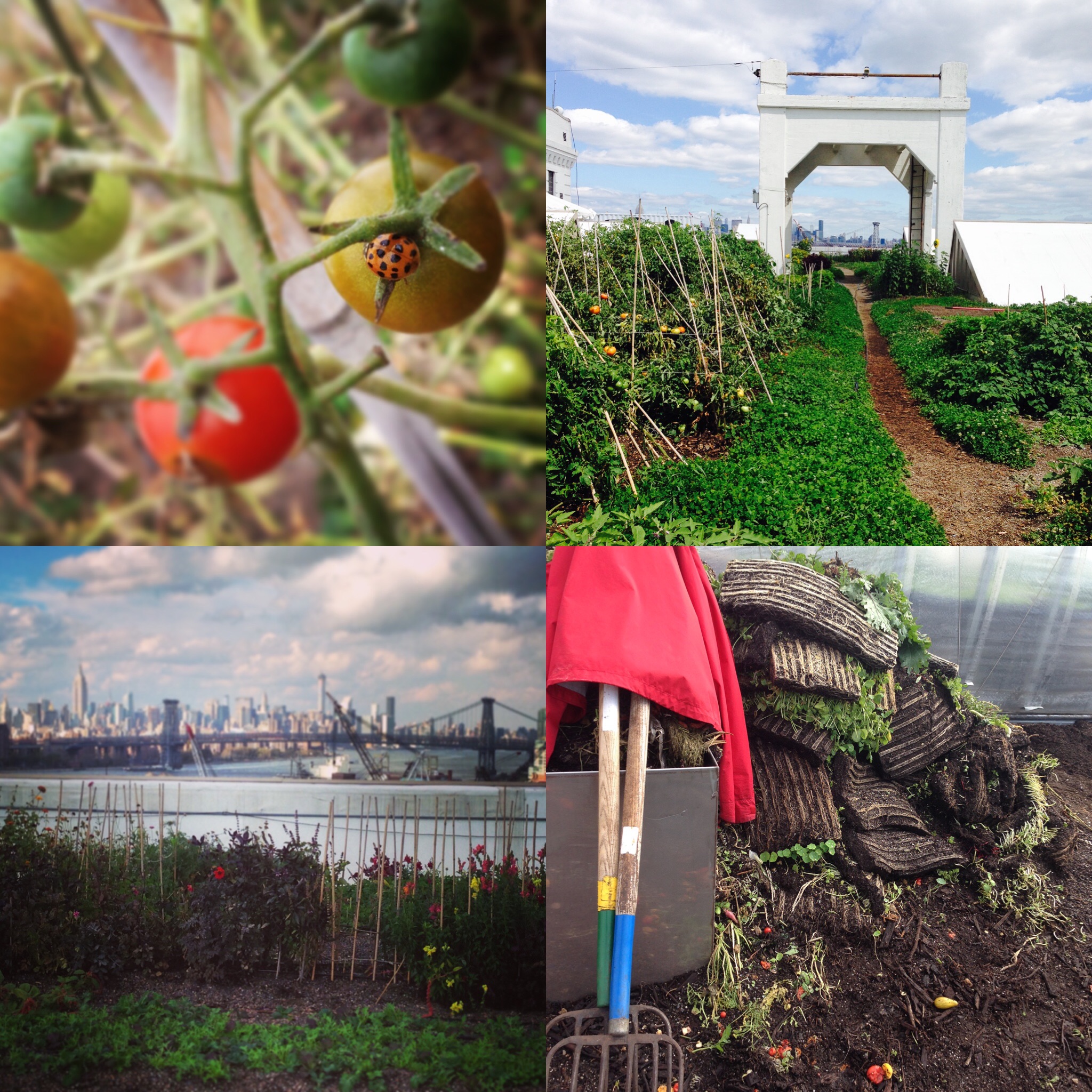
Brooklyn Grange rooftop farm in New York City (brooklyngrangefarm.com.) Photo credit: Alina Potts

After moving around so much, and often living and working amidst great destruction, gardening has become a very important part of my life. There is a certain predictability and reciprocity to it: yes, weather and insects can cause damage but in general, you get back what you put in. And often you get more. To connect with the earth, to feel rooted in one spot, to notice the tiny changes as things grow from one day to the next. For this I am grateful.

Whether it’s a houseplant or a garden or (in my case) a rooftop farm in Brooklyn, perhaps you’ve found the same. Or other pursuits: drawing, pottery, surfing, sewing, building birdhouses. I would love to hear about them. And see pictures!

Tip for those who say they don’t have a green thumb: I’ve found that staying in one place is key. When you leave your cactus for weeks or months at a time then yes, she will probably die. But it’s not your thumb’s fault!

Taking a sabbatical from violence

When I first shared that I would be leaving my job, I was met with a lot of questions and some stunned silences. This felt a little isolating, to say the least. It had been a difficult decision to make, and it was even more difficult to communicate.

About a month after giving notice, I took part in a team retreat with several days devoted to staff care. It was facilitated by an amazing woman who had a long history of working with survivors of domestic violence, mostly within the U.S. At one of the breaks, I approached her to ask for advice about how to approach this next phase of my life. She told me how she’d run a support hotline for women in the 1980s. She carried a beeper and would receive pages in the middle of the night and run outside to the nearest payphone to respond to them.

She continued her work with survivors for many years, to a point where she felt that she needed some separation from it, some time to attend to herself and the vicarious trauma she experienced. So she took a year-long “sabbatical from violence” in which she even Continue reading

On genocide and earthquakes

April 24th was the 100th anniversary of the Armenian genocide. I listen to BBC in the mornings, and they had been talking about it for days. Playing recordings of interviews with survivors, talking to their descendants, discussing the Turkish government’s refusal to recognize the genocide even a century later and what that means for those whose lives have been forever affected.

Anniversaries like this really affect me. I felt down, sad, confused. Listening to stories of Armenians forced to march into the Syrian desert, I thought of what I had seen while working in northern Syria: so many families forced from their villages and living under olive trees in the provinces bordering Turkey. As aid workers, many of us have an intimate knowledge of war, desperation, even genocide. For me, it felt deeply important to acknowledge and honor what Armenians have been through and what it must feel like to Continue reading

‘I Regret Everything’: Toni Morrison Looks Back On Her Personal Life | NPR

At one point – I don’t want to give away too much of the actual story – but at one point, she’s in an accident and breaks her foot, so she’s kind of immobilized. And so she’s thinking [reads aloud]:

Helpless, idle, it became clear to Bride why boredom was so fought against. Without distraction or physical activity, the mind shuffled pointless, scattered recollections around and around.

And that strikes me as, like, what you’re talking about when you’re not writing, when your mind is idle, that it just kind of goes through the shuffle of thoughts – in your case, negative thoughts [laughter] – that you dwell on in a way that you’d prefer not to.

Terry Gross interviewing Toni Morrison and reading from her book God Help the Child

You can listen to the full interview here.