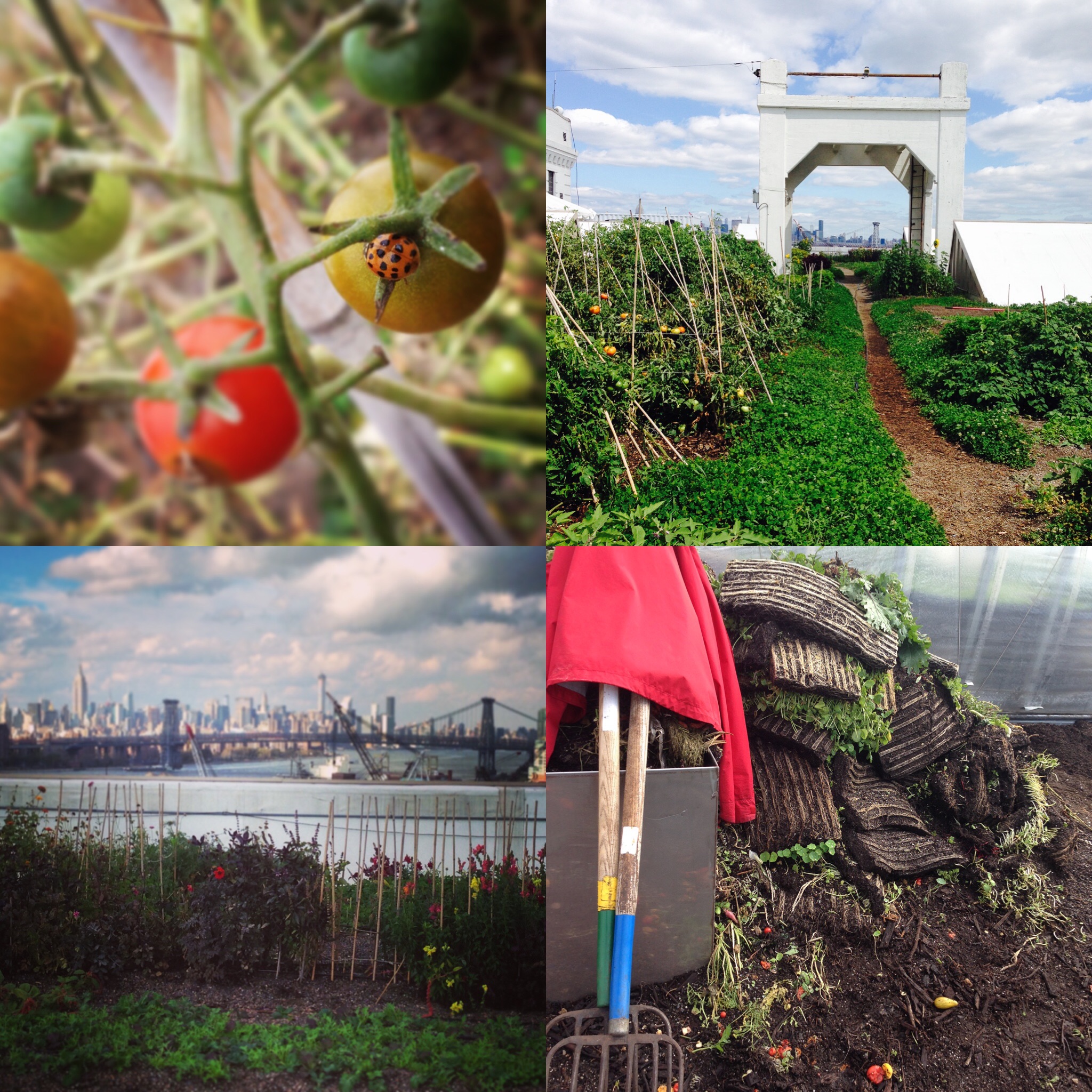
Putting down roots

Alina Potts 2014_Brook

Brooklyn Grange rooftop farm in New York City (brooklyngrangefarm.com.) Photo credit: Alina Potts

After moving around so much, and often living and working amidst great destruction, gardening has become a very important part of my life. There is a certain predictability and reciprocity to it: yes, weather and insects can cause damage but in general, you get back what you put in. And often you get more. To connect with the earth, to feel rooted in one spot, to notice the tiny changes as things grow from one day to the next. For this I am grateful.

Whether it’s a houseplant or a garden or (in my case) a rooftop farm in Brooklyn, perhaps you’ve found the same. Or other pursuits: drawing, pottery, surfing, sewing, building birdhouses. I would love to hear about them. And see pictures!

Tip for those who say they don’t have a green thumb: I’ve found that staying in one place is key. When you leave your cactus for weeks or months at a time then yes, she will probably die. But it’s not your thumb’s fault!

Taking a sabbatical from violence

When I first shared that I would be leaving my job, I was met with a lot of questions and some stunned silences. This felt a little isolating, to say the least. It had been a difficult decision to make, and it was even more difficult to communicate.

About a month after giving notice, I took part in a team retreat with several days devoted to staff care. It was facilitated by an amazing woman who had a long history of working with survivors of domestic violence, mostly within the U.S. At one of the breaks, I approached her to ask for advice about how to approach this next phase of my life. She told me how she’d run a support hotline for women in the 1980s. She carried a beeper and would receive pages in the middle of the night and run outside to the nearest payphone to respond to them.

She continued her work with survivors for many years, to a point where she felt that she needed some separation from it, some time to attend to herself and the vicarious trauma she experienced. So she took a year-long “sabbatical from violence” in which she even Continue reading

On genocide and earthquakes

April 24th was the 100th anniversary of the Armenian genocide. I listen to BBC in the mornings, and they had been talking about it for days. Playing recordings of interviews with survivors, talking to their descendants, discussing the Turkish government’s refusal to recognize the genocide even a century later and what that means for those whose lives have been forever affected.

Anniversaries like this really affect me. I felt down, sad, confused. Listening to stories of Armenians forced to march into the Syrian desert, I thought of what I had seen while working in northern Syria: so many families forced from their villages and living under olive trees in the provinces bordering Turkey. As aid workers, many of us have an intimate knowledge of war, desperation, even genocide. For me, it felt deeply important to acknowledge and honor what Armenians have been through and what it must feel like to Continue reading

‘I Regret Everything’: Toni Morrison Looks Back On Her Personal Life | NPR

At one point – I don’t want to give away too much of the actual story – but at one point, she’s in an accident and breaks her foot, so she’s kind of immobilized. And so she’s thinking [reads aloud]:

Helpless, idle, it became clear to Bride why boredom was so fought against. Without distraction or physical activity, the mind shuffled pointless, scattered recollections around and around.

And that strikes me as, like, what you’re talking about when you’re not writing, when your mind is idle, that it just kind of goes through the shuffle of thoughts – in your case, negative thoughts [laughter] – that you dwell on in a way that you’d prefer not to.

Terry Gross interviewing Toni Morrison and reading from her book God Help the Child

You can listen to the full interview here.


Advice from a Buddhist monk

At the beginning of taking this time off, I thought about… I had this open question of, ‘Do I want to stay in the ‘do-gooder field,’ you know the humanitarian, NGO whatever. Because there’s a lot that’s wrong with it, and there’s a lot that doesn’t address, or doesn’t really get at root issues and root causes of suffering… I don’t want to get into idiot compassion, I don’t want to do it for that reason. When I think about other things that I have always had a strong interest in, when I was younger I thought I’d be an environmentalist. In another life, I must’ve been a dancer because I don’t really do dance at all in this life, but I idolize dancers.

Sokuzan: You already dance with your own life, the thing you do with your life is kind of a Continue reading